
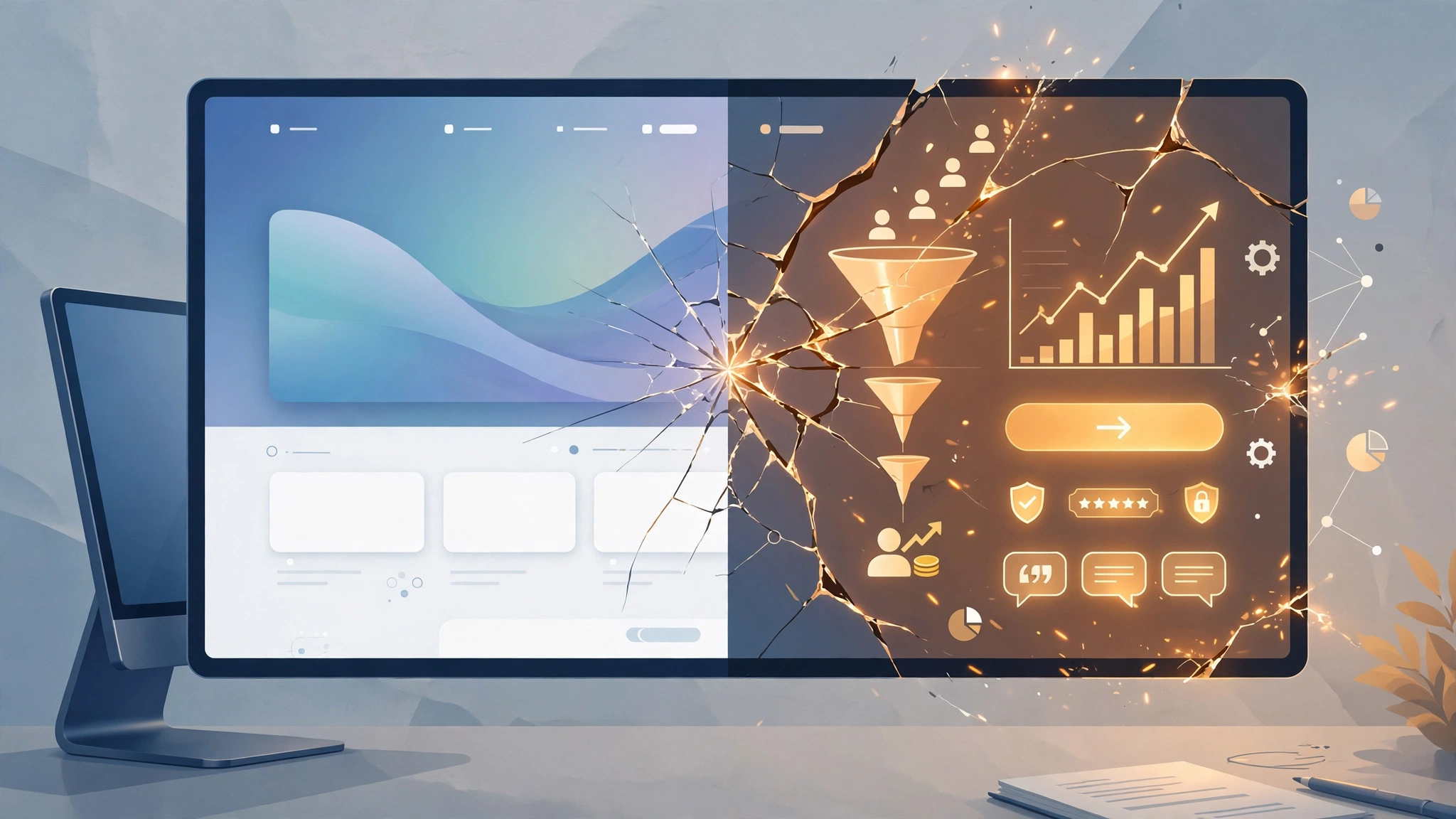
A beautiful website is not always a successful website.
Many businesses invest thousands of dollars into creating modern designs, animations, and premium visuals. But after launching, they discover one frustrating problem:
Visitors are coming, but customers are not.
The reason is simple. A website is not just a digital brochure. It is a business tool designed to guide visitors, build trust, and encourage action.
Here are the most common reasons why websites fail to convert.
1. The Website Talks About The Business, Not The Customer
One of the biggest mistakes businesses make is focusing only on themselves.
A homepage filled with statements like:
“We provide the best solutions.”
“We are experts in our industry.”
“We have years of experience.”
does not immediately answer the customer’s biggest question:
“How can you help me?”
A high-converting website focuses on customer problems, desired outcomes, and clear solutions.
Your visitor should understand within seconds:
• What you offer
• Who you help
• Why they should choose you
2. Poor User Experience Creates Lost Opportunities
A website can look impressive but still provide a frustrating experience.
Common UX problems include:
• Complicated navigation
• Slow loading speed
• Too many choices
• Unclear buttons
• Poor mobile experience
Users do not want to think about how to use your website. They expect everything to feel natural.
Good UX removes unnecessary friction and helps visitors reach their goals faster.
3. Lack of Trust Makes Customers Hesitate
People rarely buy from a business they do not trust.
A professional website should include trust-building elements such as:
• Client testimonials
• Case studies
• Real project results
• Clear pricing information
• Professional branding
Trust is not created by saying “we are the best.” It is created by showing proof.
4. Weak Call-To-Action Reduces Sales
Many websites lose potential customers because they do not clearly tell visitors what to do next.
A strong call-to-action guides users toward the next step.
Examples:
“Book a Free Consultation”
“Get Your Custom Quote”
“Start Your Project Today”
The goal is not to force visitors. The goal is to make the next action simple.
5. Design Without Strategy Does Not Create Results
Good design is not only about colors, fonts, and layouts.
A successful website combines:
• User psychology
• Business goals
• Clear messaging
• Visual hierarchy
• Smooth user journey
Every section should have a purpose.
A hero section should create interest.
A service section should explain value.
A portfolio section should build confidence.
A contact section should remove hesitation.
Final Thoughts
A website should do more than look professional.
It should communicate your value, build trust, and turn visitors into customers.
The best websites are created by combining strategic thinking with thoughtful design.
Because at the end of the day, a website is not just about being online.
It is about helping your business grow.